
There is a poster on Facebook that says “Life is too short to (knit, weave, crochet) with cheap yarn.”
I agree. But define ‘cheap’?
One of the main complaints of new weavers is that weaving is so expensive – the yarn costs so much.
OTOH, when I look at yarns for knitting, my thought is “that’s so expensive!” When you look at what you are getting for your money, there can be quite a large difference in cost per ounce, knitting vs weaving yarns.
The thing is, weaving just uses up way more yarn so the initial outlay may seem as though it is more expensive. Instead of one skein of 100 grams of knitting yarn for, say, $25 a new weaver may buy 3 or 4 tubes (8 ounce tubes) for more than that. But compare the weight and yardage. Generally speaking, cost per ounce for weaving yarns is a lot less than for knitting or crocheting.
So what is a ‘cheap’ yarn? Are we talking inexpensive? Or poor quality? The word ‘cheap’ can be defined as either.
My approach to weaving has been to work with the best quality yarns I can afford. So no, I don’t buy the acrylics commonly available in Michael’s or Wally World. I go to weaving yarn suppliers. I examine the way the yarn has been spun. Test it for strength. For integrity in the loom as warp.
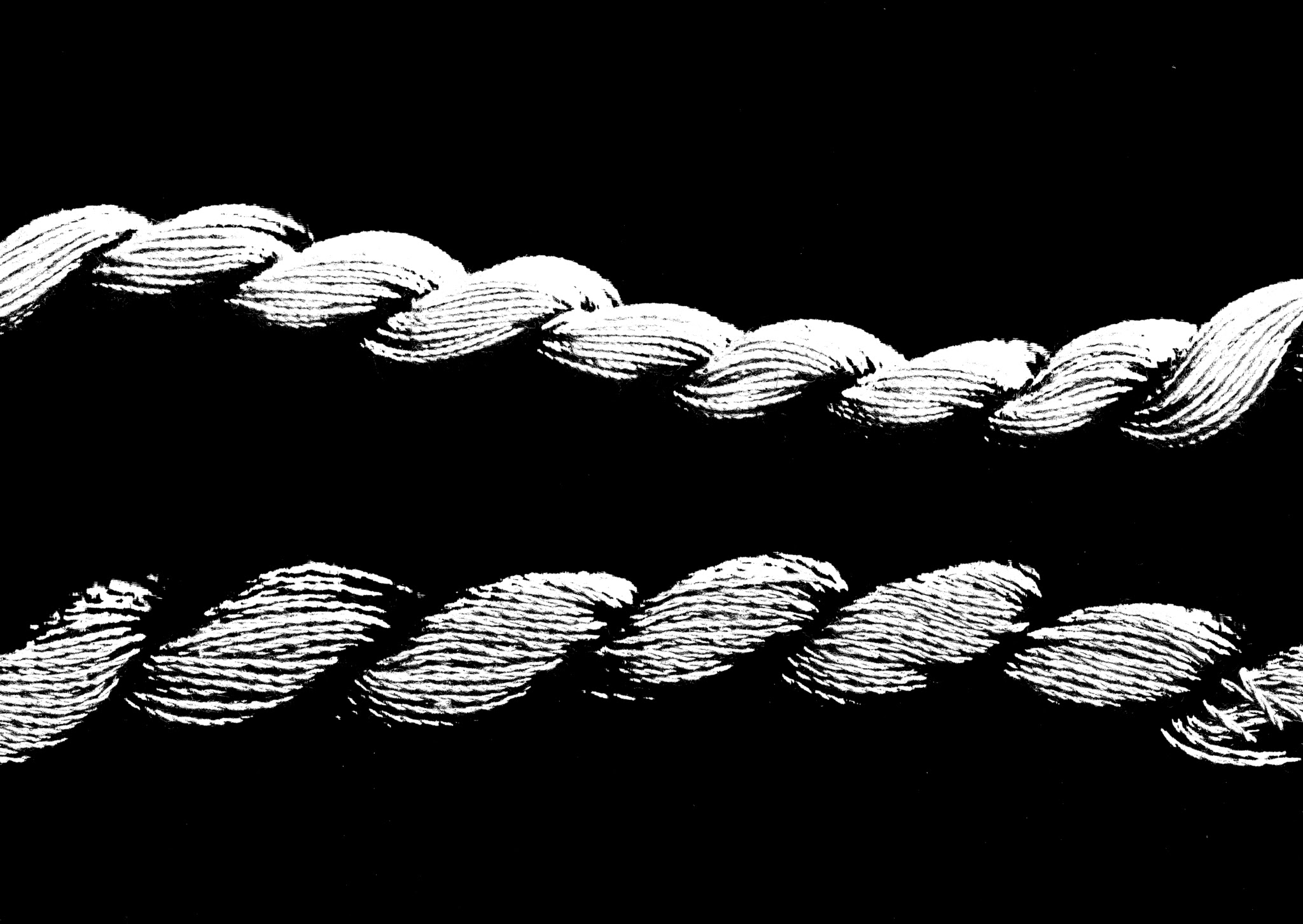
If you look closely at the photo above (click to biggify) you will see two skeins of 2/8 or 8/2 cotton yarn.
Can you see the difference between them? That one looks whiter and smoother than the other?
The skein on the top is Canadian standard 2/8 cotton. The other is American standard 8/2 cotton. (Although you can get 2/8 cotton now in the US – try WEBS and their Eight/Two cotton or Yarn Barn of Kansas – read the fine print where it describes the yarn as more tightly twisted for warp.)
Ring spun cotton is more like a worsted preparation while open end spinning is more like woolen preparation. The ring spun yarn is smoother and stronger (by about 20% according to industry) than open end spun yarn of the same fibre.
My approach to weaving (I’ve said before and I’ll say it again, no doubt!) is that the most expensive component of a hand woven textile is the time the weaver invests in creating their textile. Why would I work with materials that can’t stand up to the stresses of weaving?
My preference for warp is a stronger yarn. The weaker yarn belongs in the weft. IMHO.
Learn more about the inherent qualities of the yarn you are working with and make appropriate choices. Watch this space for more information on my up-coming webinar with Weaving Today on just this topic.