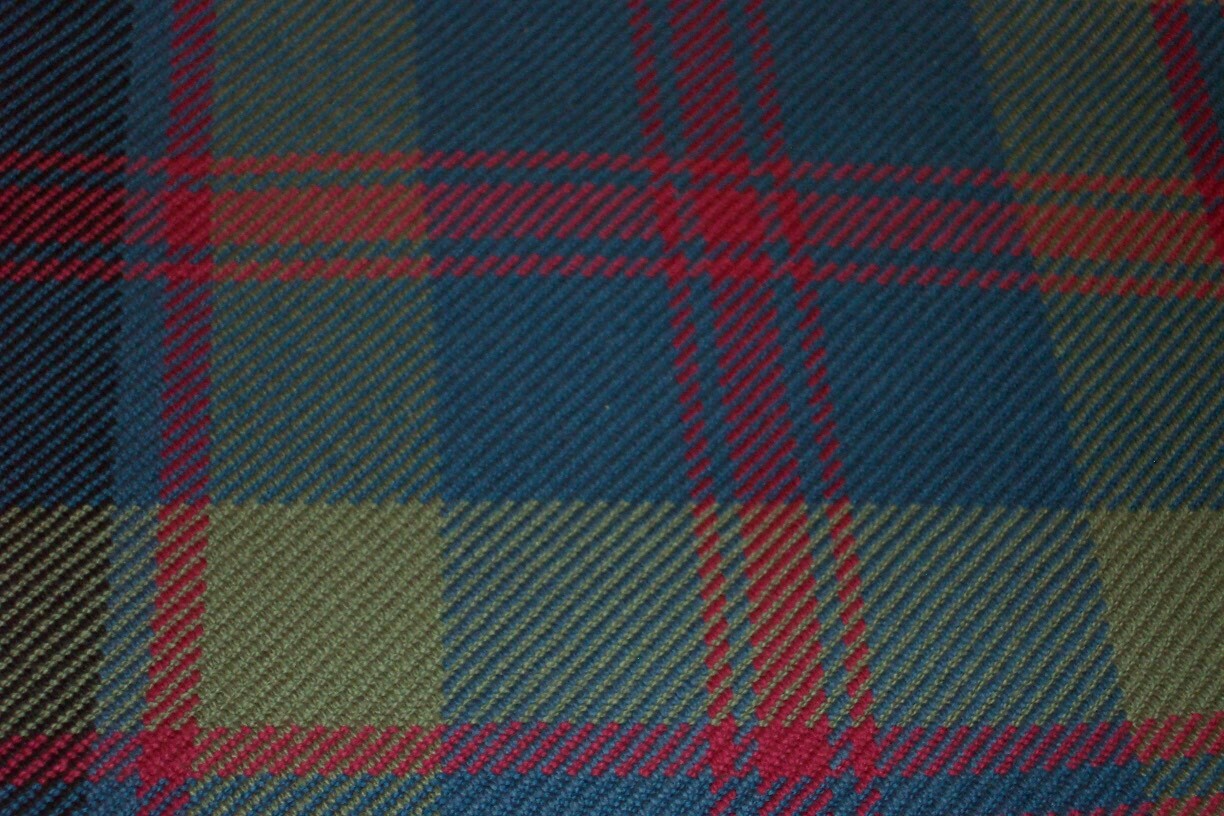
Tartan baby blanket woven in 2/8 cotton by Monique – I think this was her 3rd project and she knocked it out of the ballpark – no mistakes in the warp or weft order and a pretty near perfect 50/50 beat
One of the things that can happen with a 2:2 twill is that, upon wet finishing, the fabric can skew along the twill diagonal.
I’m not exactly sure what factors can cause it to happen more dramatically than at other times. I’d have to weave a bunch of samples and check for things like twist energy in the yarn, density and so on. All I know is that at times it happens and it can be quite dramatic.
So it was with Monique’s tartan baby blanket. I assured her that it could be reduced if not eliminated entirely in the wet finishing.
/ |
/ |
| |
| |
| /
| /
The above is bad ASCII art showing an exaggerated bias along the twill diagonal. (The twill line is running from lower left to upper right as in the photo.)
During wet finishing, before the cloth dries completely, what I do is take the cloth at the opposite points and pull the cloth back into a rectangular shape and then give it a hard press until dry. In other words, I’m pulling against the twill diagonal (upper left and lower right hand corners).
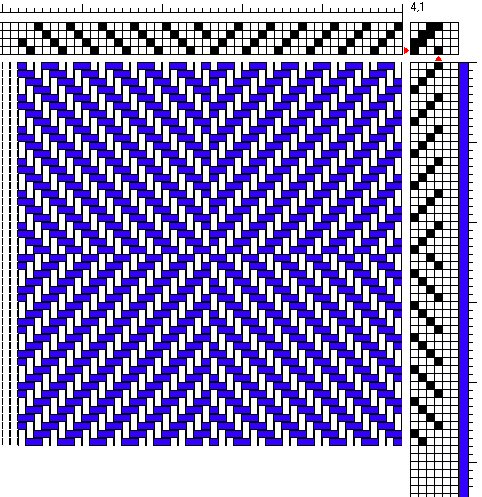
One way to avoid this happening is to weave a twill where the diagonal changes direction on a fairly regular basis. It’s one reason I like Wall of Troy.

If I want to weave large diamonds, I’ll use a herringbone threading and treadling so that there are no issues with the outside threads ‘falling out’ of the cloth when the diagonal changes direction.