
Winding three colour warp with cheat sheet
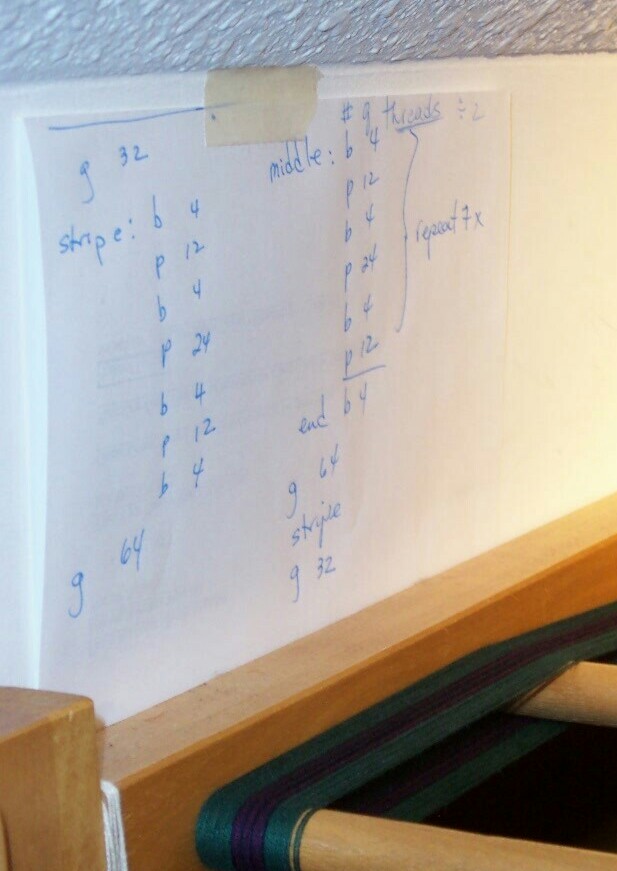
When I’m winding a long or complex stripe sequence I post a cheat sheet above the warping board so that I can keep track of which colour comes next and how many ends of each colour are required.
In this case my counting string will count not merely threads but repeats of the stripe sequence. There will be two warp chains. I will break the warp into two more or less equal numbers of ends so that there will be about 3.5 of the middle stripe repeats in each warp chain. The trick, of course, is to get the warp chains side by side properly, but with this design that won’t be difficult.
dyed 2/20 silk
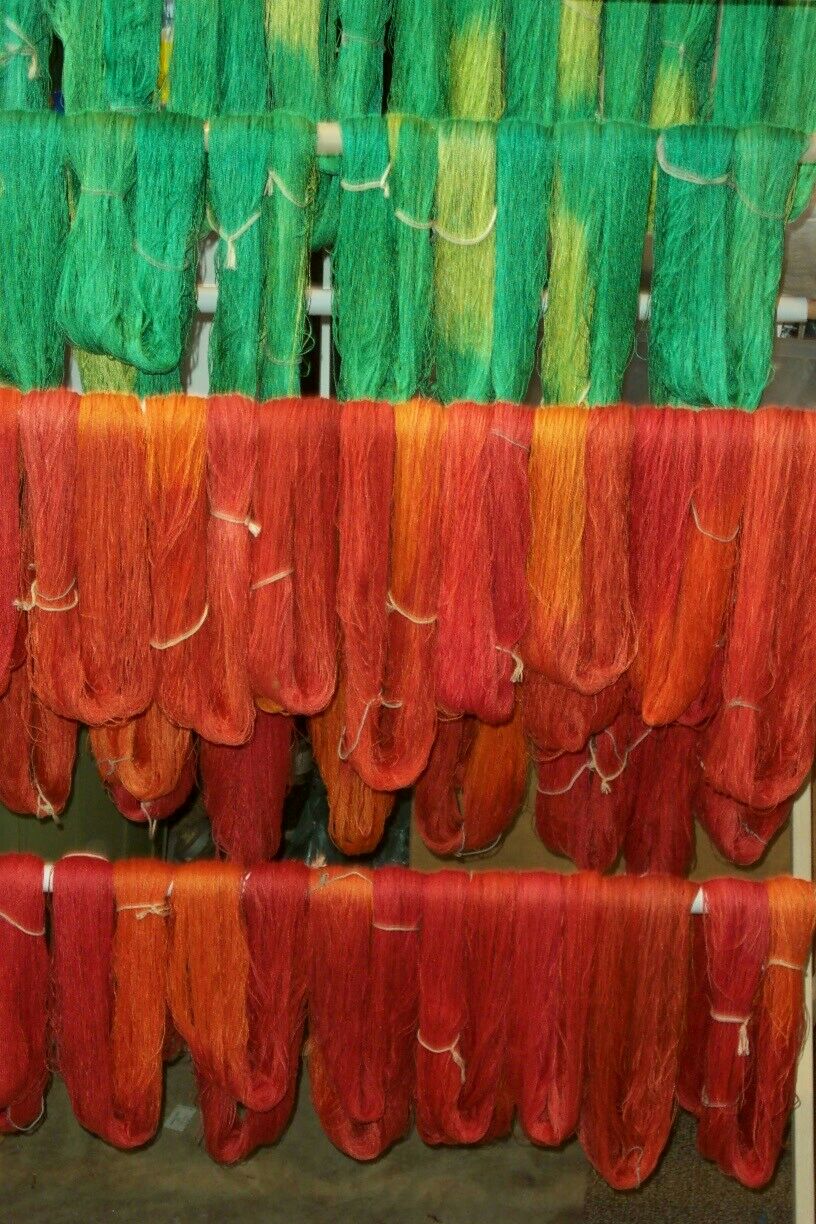
Yesterday was a ‘dye day’ and I got 40 fifty gram skeins dyed. I’d been having some problems with resist marks from the skein ties and whined about this to someone I respect as a dyer who made her living for many years dyeing silk and would therefore know. She told me to remove all of the X ties and just tie circles of string loosely around the skeins.
Well, I was a bit hesitant but followed her advice and voila, no resist marks. Yes, the skeins did get a little unruly, but not much more so than with X ties.
Which leads me to step onto my soapbox. Many people complain bitterly about fugitive dyes ruining their projects. Often when I ask them how they wet finish they begin by saying something like “I soak the cloth for 24 hours…..”
This is an open invitation for any fugitive dye to release and settle elsewhere on the cloth.
I always assume that any dyed yarn has fugitive dye in it and treat it accordingly.
Therefore I never ever soak a web but get it into the water and rinse, rinse, rinse until I am sure there is no fugitive dye lurking to settle elsewhere and ruin my weaving. I use Color Catchers (made by the people who bring you Shout products) when I know for a fact there is fugitive dye in the yarn – and generally any cellulose yarns that have been hand dyed will for sure have fugitive dyes.
I’ve been told by some dyers that they rinse until there is just ‘blush’ left which means that there may not be much dye, but there is some left.
I’ve also found that in acid dyes magenta can have fugitive dye molecules that are difficult to rinse completely out and sometimes cyan can be problematic, too.
So as I say, always assume there will be fugitive dyes and wet finish accordingly.
Just one more good reason to wet finish your handwovens and not gift or sell un-wet finished articles.
And yes, the silk yarn will be on my Art Fire store in the new year.