
Category: threading draft
-
Reading Drafts part VII
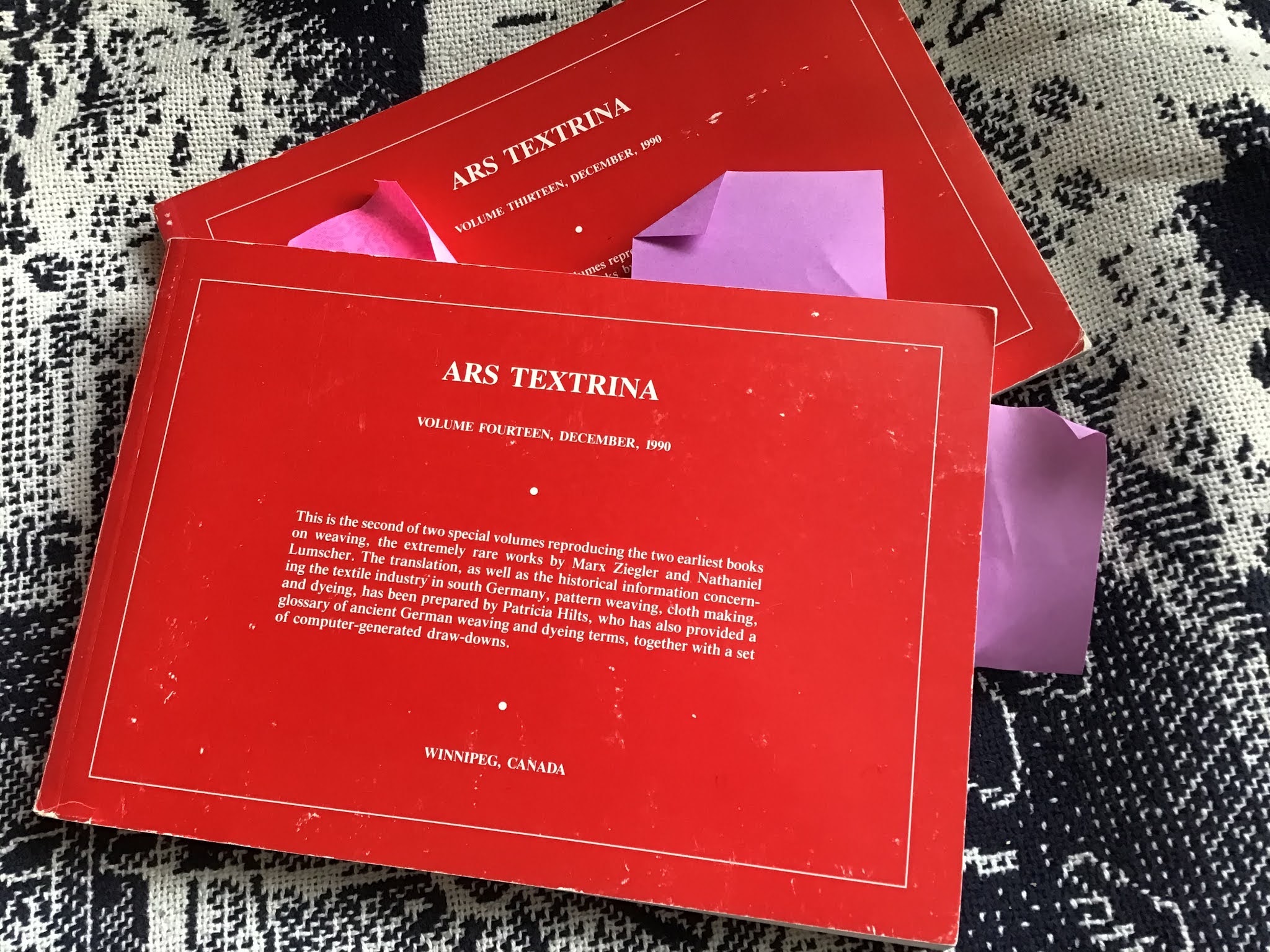
Ars Textrina was a scholarly publication that dealt with the history of textiles and as such was expensive. I bought every issue until I could no longer afford them, but they stopped publication soon after anyway. A few years ago (quite a few now, man, am I ever *old*!) I needed money quite badly,…
-
Reading Drafts part VI
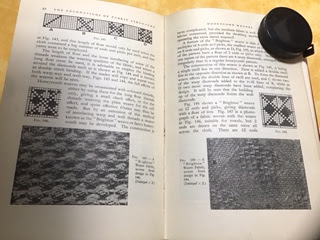
Fabric Structure by John. H. Strong was published in 1947 and reflects British terminology – eg honeycomb or Brighton honeycomb is what North Americans would call waffle weave. (top photo) Strong shows a variety of tie ups for achieving different effects in the cloth and then rather poor black and white photos show the…
-
Reading Drafts part V
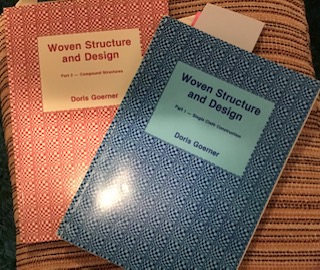
Doris Goerner charting Bedford Cord More textbooks, this time contemporary, presented by Doris Goerner. These books are from the UK so be aware that where Brighton Honeycomb is listed, we would call that waffle weave. These books have very little text and large clear illustrations of various weave structures. I think they were developed…
-
Reading Drafts
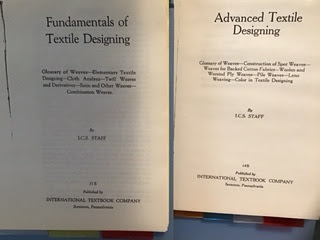
Two textbooks – title pages page about double weave from Advanced Textile Designing I don’t remember how I managed to acquire photocopies of these two textbooks, prepared for the textile industry by the International Textbook Company of Scranton, PA, but I remember they were done with permission. It was most likely through WeaveTech. The books…
-
Reading Drafts part IV
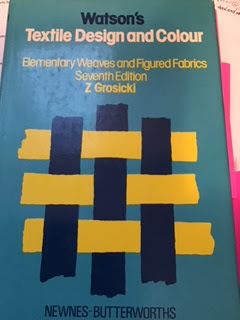
pink post-it notes poking out the side an explanation of pique by breaking it down into its parts First published in 1912 (according to the info in the book) Watson’s Textile Design and Colour has been updated frequently throughout the 20th century. I discovered the book in the 1980s I think and immediately bought…
-
Reading Drafts part III
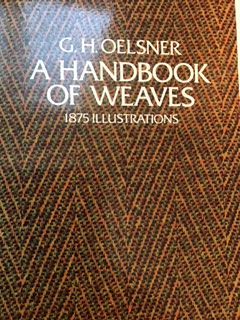
G. H. Oelsner first published 1915, then reprinted by Dover in 1952. It says it was translated, and I am assuming from German but don’t know for sure. threading below, draw up above, tie up notated in the top left corner – draft was turned 90 degrees to fit on the page – two…
-
Reading Drafts part II
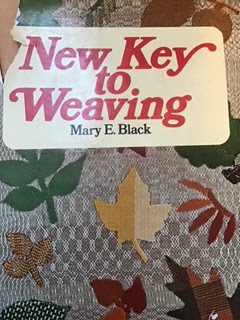
Mary Black example of MBs notation – rising shed on the right, sinking shed on the left example of profile draft on top, tie up box just below, profile treadling indicated Mary Black wrote her Key to Weaving back in the 1940s and updated it regularly through her life. As such it reflects the…
-
A Series on Reading Drafts part I
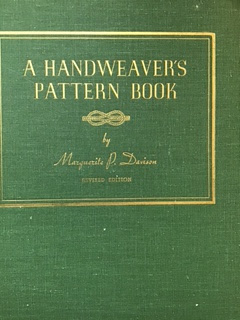
Someone asked about how to read ‘historical’ drafts. After mulling it over for a while, I felt a more extensive approach to answering this question might be useful. So I’m going to go through my personal library and talk about some of my books, how the authors approach presenting technical information and at some point…
-
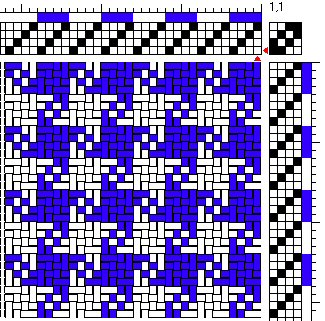
Choosing Direction
Above are two drafts for a four shaft ‘pin wheel’. Notice anything about them? The cloth is identical, the only difference is in the direction they have been threaded and the tie up. The one on top is how I prefer to thread. I am right handed, prefer to thread from right to left with…
-
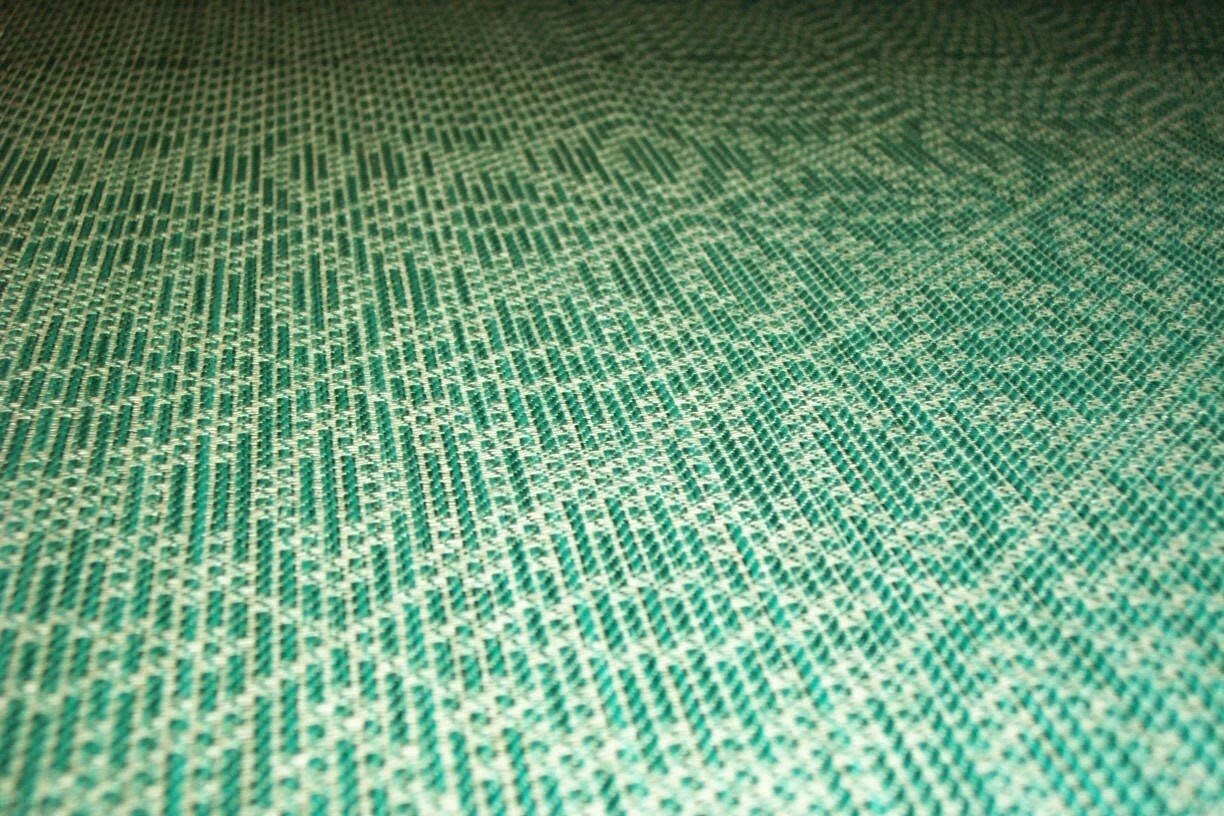
Imperfect
So, here is the next warp. It’s not perfect. You might just be able to make out the mistake I made when generating the threading for this. Seems my pain fogged brain wasn’t really up to the task. As I threaded yesterday, I came across a discrepancy – a doubled block. When I checked back…