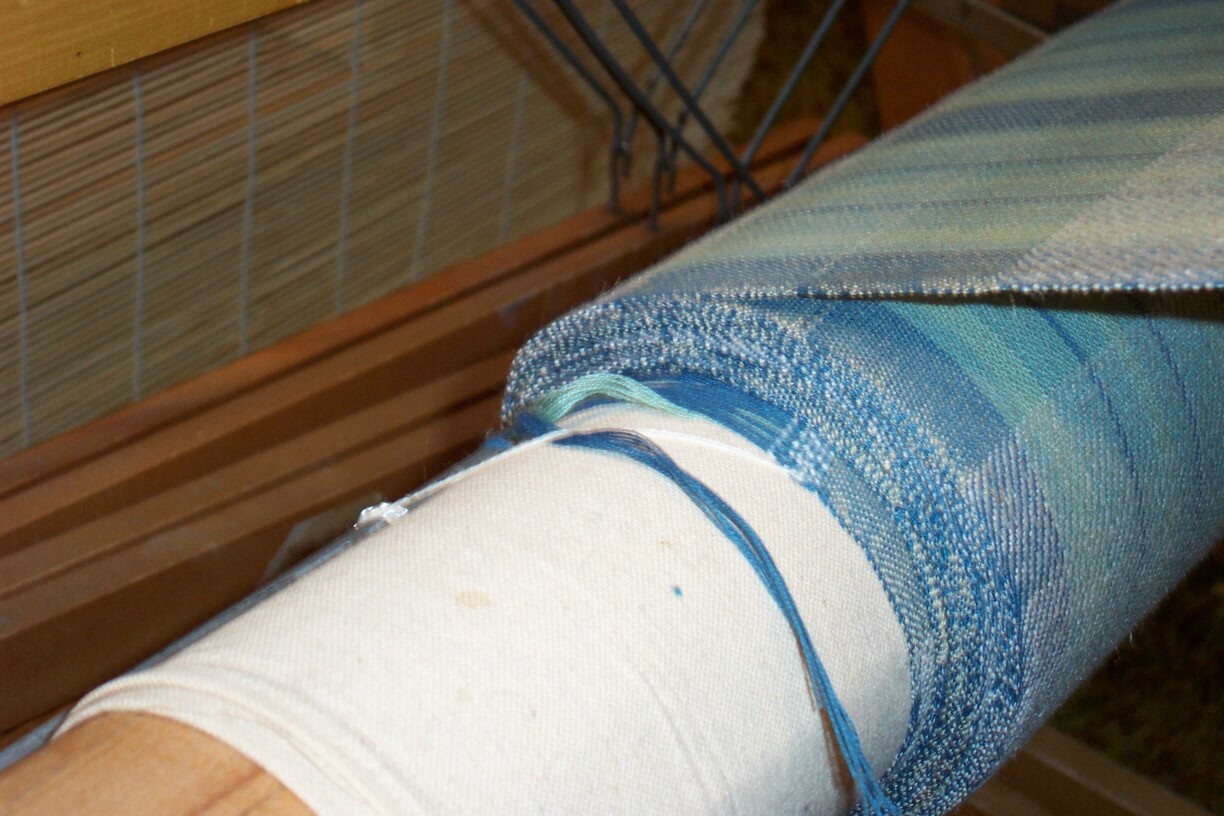
One of the things that I don’t think is mentioned very often is that of build up on the cloth beam when a long-ish warp is woven. This warp is 13 meters and at this point there are about 11 of them wound onto the beam. The cloth has built up about an inch in thickness so far.
As the diameter of the beam changes, so does the tensioning of the warp change. With that much cloth rolled onto the beam the tension seems to get a bit ‘soggy’, probably because the cloth itself is ‘soft’ and somewhat giving. Plus the change in diameter means the ratio between the cloth built up and the brake has changed, too. (This is not an issue with an AVL loom that has a separate cloth storage roller and sandpaper beam. On these looms the tension is only held between the warp beam and the sandpaper breast beam – the build up of cloth on the storage roller has no effect on the tension of the warp. I can store about 40 yards on my AVL.)
When I weave a warp this long with all of the cloth wound onto the beam I find that I have to work a bit harder to set the tension on the warp – it feels like I’m putting more tension on it, just in order to achieve the same tension. If that makes sense. In other words, I have to pull on the handle harder, the tension applied feels tighter, in comparison to earlier on in the weaving.
If I don’t get the warp tight enough the weft pulls stronger on the selvedge and little ‘lines’ appear because the weft has drawn the selvedge threads inwards more than previously. Mostly this unevenness evens out during the wet finishing, but if it doesn’t completely go away I don’t worry about it too much. Most people don’t notice (unless they are weavers) and it doesn’t affect the way the cloth behaves. So rather than tie myself into a knot worrying about a little inconsistency, I just correct and carry on. And try to set my tension better the next time.
I also find that with a wider warp the sweet spot is smaller. By that I mean the placement of the fell line is best in a smaller area, which means that the warp needs to be advanced more frequently. If not, small inconsistencies can develop at the selvedge. It really pays to advance more often rather than try to force just a few more picks into the cloth before stopping.