
Oh that pesky English language. You know, the language that evolved from so many other languages? So many that we have multiple words that mean the same thing, but we also have words that have multiple meanings? Yes, that English language.
It gets very confusing! Craftspeople who practice one art and take up another may think they know what the words they are hearing mean, but quite often they don’t. And because they think they know what they are hearing, they simply don’t understand the information that is being conveyed.
So, what are some examples?
Knitters taking up weaving often have a large stash of worsted (weight) yarn they want to use up. Unfortunately the word ‘worsted’ does not mean the same thing to spinners and weavers as it does to knitters.
For knitters ‘worsted’ means a weight or thickness of yarn. For spinners and weavers, it is a particular quality of yarn that may come in a large variety of thicknesses.
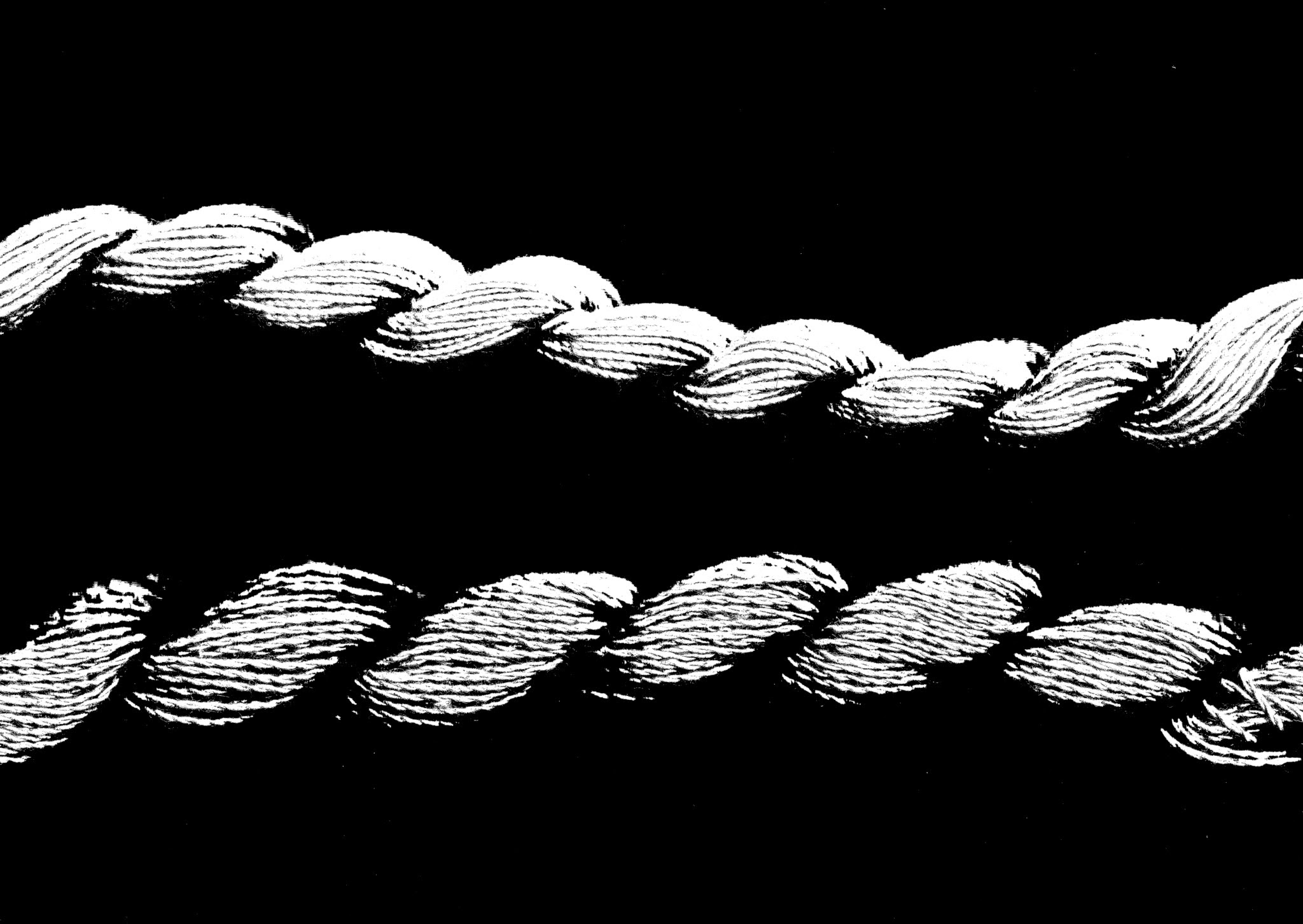
The photo above shows one of these points of confusion. Both are cotton at about the same grist. Are they the same? Quite obviously they are not. But these yarns are treated by many weavers as though they are identical. What they are is approximately the same thickness (3360 ypp) but they are not the same in terms of strength, texture or how they will behave as warp/weft. And yet they are consistently referred to, both of them, as 8/2 cotton.
According to Judith MacKenzie, a yarn spun in a ‘worsted’ manner (i.e. fibres combed not carded) should be described as 2/8 – with the ply coming before the count. When I started weaving, this is how the top yarn was described and sold in Canada. Over the years, my supplier has taken to putting the English version of their catalogue with the ply second, like they do in the US. But the yarns are not the same….confusion results…
So what other words elicit confusion? Fulling/felting. Harness/shaft. These words are used interchangeably. I no longer know if they are the same, just so long as everyone knows what I’m referring to when I say ‘shaft’.
Weaving is a craft that has developed over thousands of years in pretty much every culture of the world. Is it any wonder we get confused when we start to try and communicate outside of our craft and our culture? Language is meant to clarify, but sometimes it just confuses.