I have been guilty of pushing generalizations. The most common one is ‘it isn’t finished until it’s wet finished’. But there are exceptions to that ‘rule’, too. Example? If an art piece has been woven with plant materials, perhaps. If the textile in question is never in its life going to be washed, perhaps.
So when you hear these sorts of generalizations, remember to keep in mind that there may well be exceptions.
There are a couple of generalizations about counter balanced looms that I see repeated over and over again without the qualifier that there are exceptions.
One is that of counter balanced looms being unable to weave unbalanced weaves. That statement is sort of true for roller type looms. The shed is, indeed, compromised. But I have one of those roller type looms and I have woven unbalanced weaves on it. Yes, the shed is compromised. I may have to weave with looser tension. I usually switch to a low profile shuttle. And I take greater care in my shuttle handling.
However, on a loom with horses (levers) instead of rollers, typical of Scandinavian type looms, unbalanced weaves are woven all the time with no difficulty at all.
The other generalization about counter balanced looms is that they can only have four shafts.
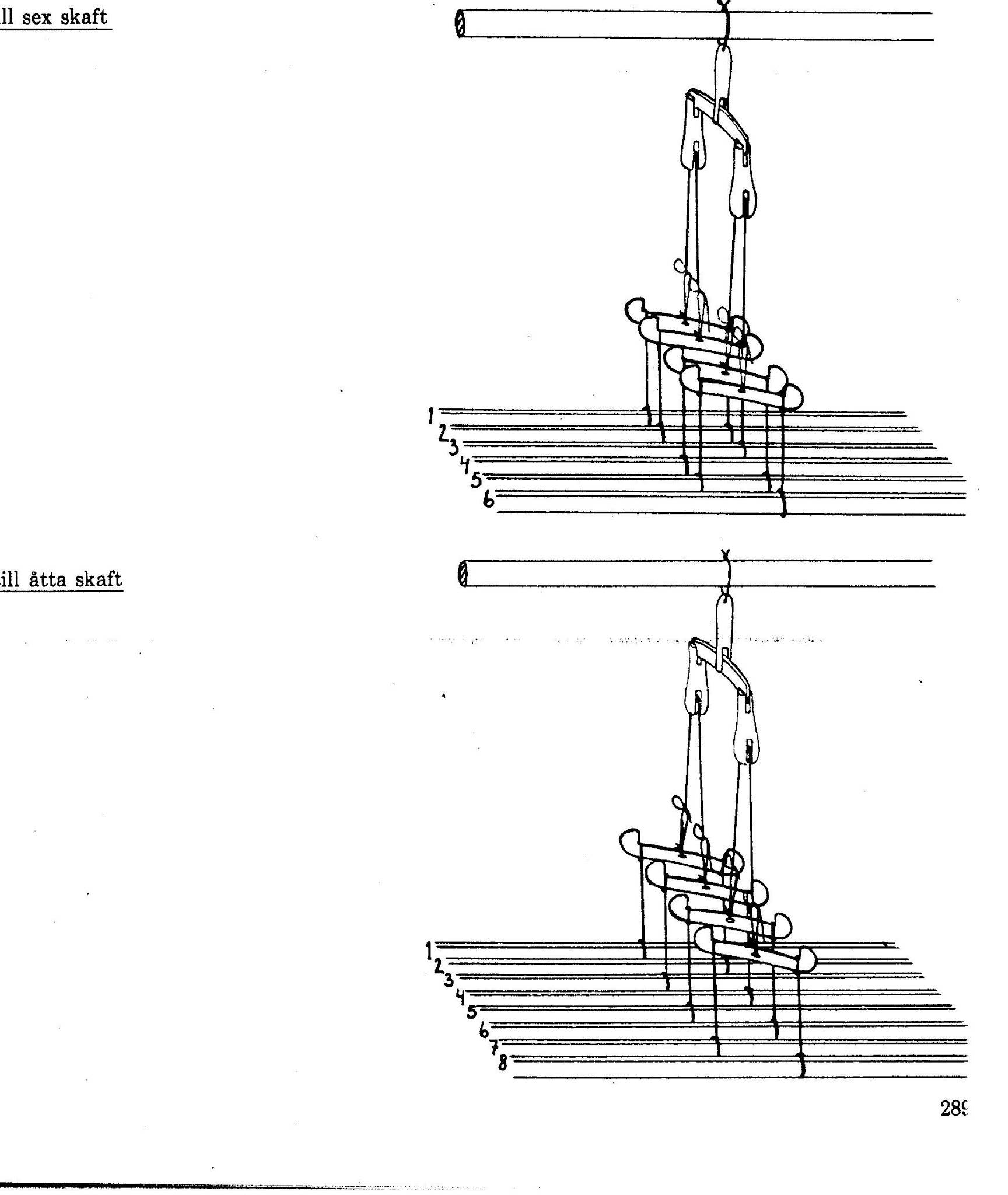
While this may (or may not) be true of roller type counter balanced looms, it is wrong for Scandinavian style looms with horses.
Here is a diagram from Laila Lundell’s book (I have the Swedish version but it is now available in English):
