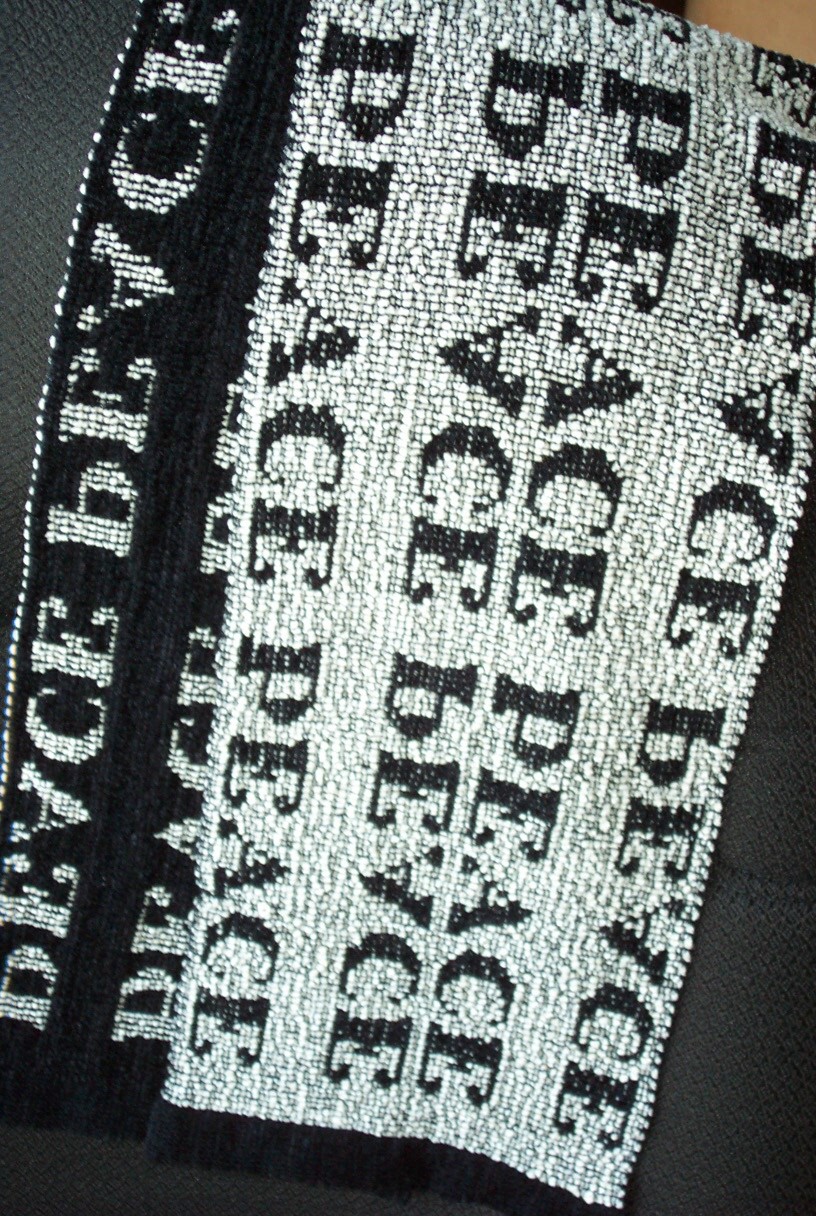
There has been a great deal of ruckus the past couple of days at the popular social platform Ravelry due to it’s stance against white supremacy. (8 million some users justifies the word popular, I think.)
Some people are furious that they should be ‘censored’ and can no longer post patterns or comments in support of Mr. Trump and white supremacist viewpoints. They rail against the suppression of ‘free’ speech (without understanding what the term actually means, assuming that they get to say whatever they please without any push back.)
The comments from some of these people on the more ‘liberal’ groups has been rude and in some cases downright vile. And yet we liberals are supposed to roll over and let them say such things without objection. Because something something free speech. On the other hand, they object to my using my free speech to tell them what they are espousing is not acceptable to me.
Another segment insists that politics and textiles should be kept entirely separate, that they knit for enjoyment not to be made uncomfortable by politics.
Thing is, textiles have been political pretty much from the beginning of human beings working with fibre.
In the very early stages of human development string or cordage was used for a variety of things, including string skirts depicted on the paleothitic goddess figurines. Since string/cordage was very time consuming to make (still is, by hand) the fact that these skirts were made most likely had some sort of religious or political significance.

As human beings evolved, textiles continued to play increasingly political roles in culture, from the ceremonial robes worn by ‘royalty’ or religious leaders, to funeral uses such as mummy wrappings.
Textiles were used as trade goods as were chemicals for dyeing such as alum. Nothing more political than trade goods between nations. (Dorothy Dunnett wrote historical fiction and includes this in a couple of her books – the Niccolo Rising series stars ‘Claes’ as a dyer’s apprentice in Bruges, who rises to become a wealthy merchant (Niccolo) in the 1400s, Francis of Lymond series has one book using cloth as a trade good with Russia during the 1500s. Recently republished they are also now available as audio books.)
Textile workers were a large and important part of any work force of all the cultures. Fibres had to be harvested, processed, spun, dyed, woven, turned into garments or for other uses. This all meant enormous numbers of people to grow the crops, harvest them, break the fibre out of the flax or hemp or which ever crop was being used. In colder climates, shepherds had to tend their flocks, shear the sheep, and then the fibre needed to be spun/dyed/woven.
As cultures evolved even further, restrictions were placed upon the populace about who could have access to certain textiles. The royal purple dye, silk damasks, gold and silver threads, to list just a few. You could tell at a glance what level of society a person was by the clothing they wore. Look up sumptuary laws.
Again the most expensive textiles were reserved for royalty and religious/ceremonial use.
Come the 1700s and the development of the flying shuttle which immediately put half of the broad cloth weavers out of work. Only one was needed to throw the shuttle once the fly shuttle was developed.
Luddites were sworn to destroy the latest textile equipment to preserve jobs in textile manufacture.
- To incite actions that would harm others (e.g., “[S]hout[ing] ‘fire’ in a crowded theater.â€).
Schenck v. United States, 249 U.S. 47 (1919). “