
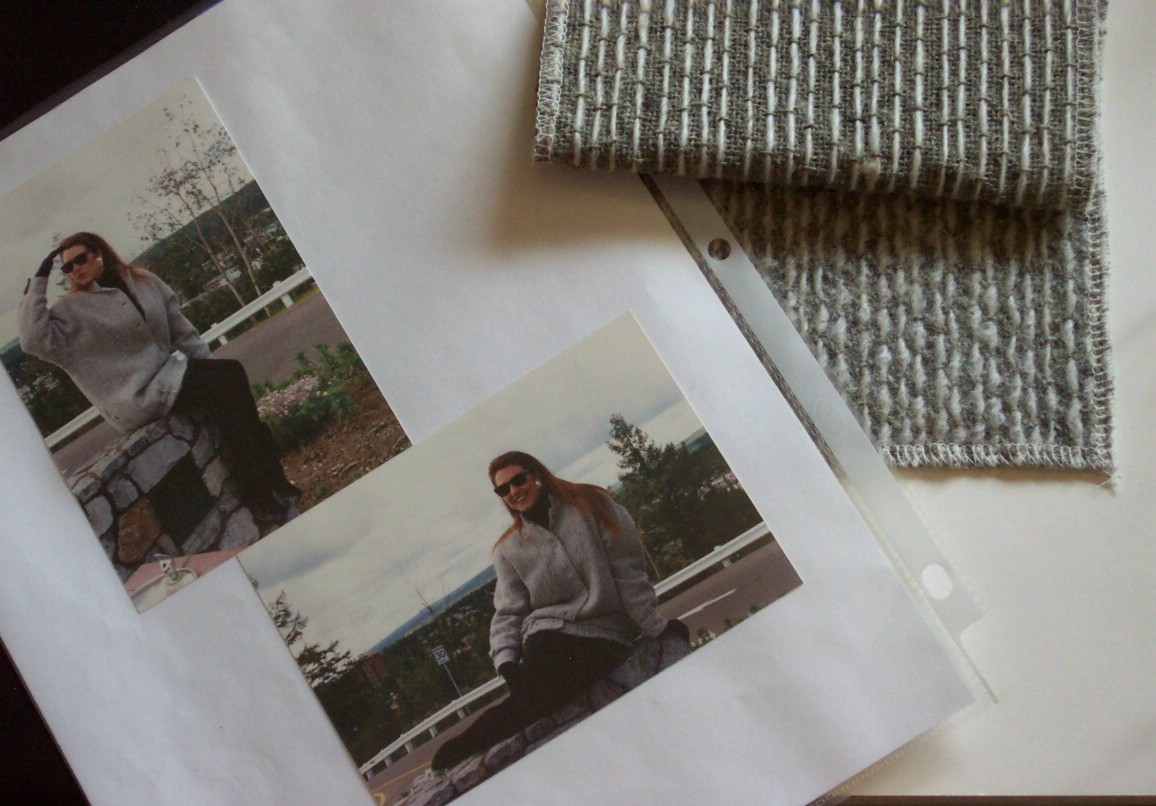
‘Shrinkage’ or dimensional loss is something I talk about – a lot. It is a phenomenon that exists and is largely unavoidable. The challenge is figuring out how much it will happen.
Since I have written about it, produced weaving classes etc., it seems redundant to address it again. But there are new weavers entering the craft who are being given differing and sometimes confusing advice. Since the full answer doesn’t generally fit into a comment on a FB post, I’m going to try to summarize it here.
And if you want videos as well as explanations, my classes are still available at the School of Sweet Georgia.
So, why does dimensional loss happen? There are two factors in ‘shrinkage’. The type that happens in the loom, and the type that happens once the web is cut from the loom, is no longer under tension, and the first time it experiences being immersed and manipulated in water (wet finishing).
A weaver can factor a rough estimate into their warp calculations. Generally an allowance of 10% in width in the loom, a further 10% during wet finishing.
The length is a little more difficult, but generally most calculation sheets will allow for loom waste of x inches, which can vary depending on the loom.
However, there is also the dimensional loss that happens to the length (take up) and this gets a bit more difficult. Why? Because there are variables and each variable will contribute to the loss.
Such variables are: fibre choice, density, weave structure, thickness of the weft threads for the woven length. As opposed to the ‘static’ loom waste – the amount of yarn being used to tie onto the front of the loom, and whatever waste is left at the ‘back’ of the loom when the warp is cut off.
It is for this reason that I will sometimes use a less expensive yarn for the warp, and a more expensive one for the weft.
The weave structure will affect take up and draw in. A weave structure like rep weave which has a very thick weft and which is warp faced, will ‘take up’ a lot more warp yarn than something with a thinner weft in a more ‘balanced’ weave.
A weave structure like waffle weave (Brighton Honeycomb for the UK) can lose enormous measures and wind up as much as half as wide/long than it was woven. You can reduce the dimensional loss of waffle weave by weaving it at a higher density, which will reduce dimensional loss, but the resulting cloth will be thicker and potentially less absorbent and stiffer.
A cloth woven from a yarn that will full (wool and other hair fibres) can lose a great deal of width/length if it is fulled significantly. It can ‘shrink’ even further if the web is woven very loosely (less density) – again it can end up less than half of the original measurements.
Some people urge people to eliminate loss of the width by making sure they ‘bubble’ the weft. This may help, but in my experience it only really ‘helps’ for a weft faced fabric – which given the density, isn’t prone to much dimensional loss width wise, anyway.
Some people assure new weavers that using a temple will eliminate width ‘shrinkage’. Not really. It may reduce some dimensional loss in the case of linen but linen has a much lower rate of dimensional loss than pretty much any other fibre, anyway.
So, what is a new weaver to do? Sample. I know, I know. You don’t want to ‘waste’ your yarn. You can jump in and take your best guess and go for it. All I’m suggesting is that you take that leap at least having a fair idea of what will result. And you do that by weaving a sample *and wet finishing it*.
Just saying…
Leave a Reply