
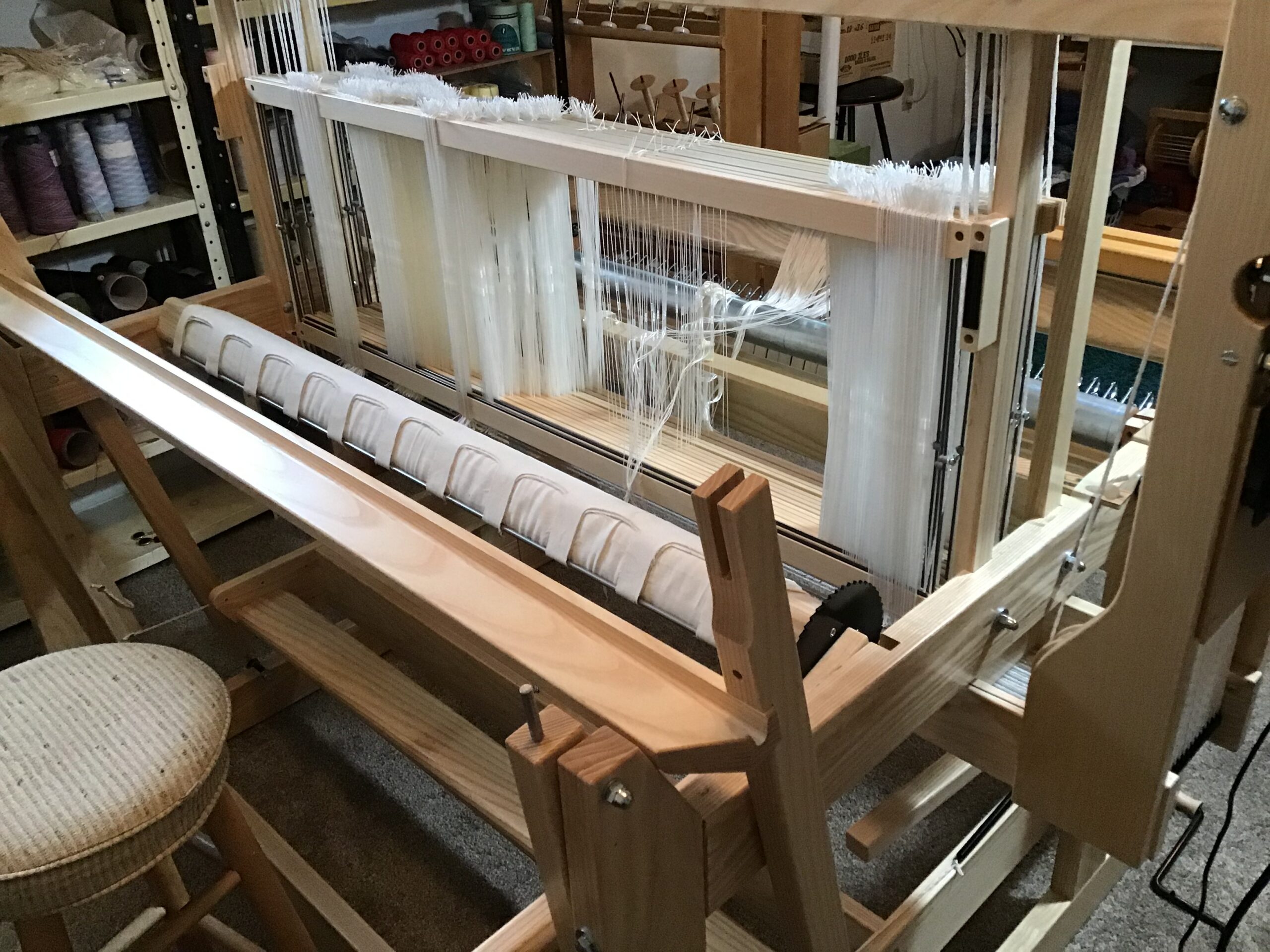
This summer has been very dry. Our area has been teetering on the brink of drought for the past few years and this year saw that continue. As such I have been keeping a closer eye on the relative humidity than usual because yarns – and looms – respond to the relative humidity in the air.
When it gets dry, wood shrinks as it releases moisture in the wood into the air. Yarn does the same. Some fibres do not behave well when they get ‘too dry’ – linen is famous for it, but also silk and even cotton and wool will generate static electricity. It shows up in some warps in the loom itself. It will show up when using an electric bobbin winder and you will get static discharge as you wind the bobbins.
During weaving the yarn will not be co-operative. The shed may not open well, especially if there tension issues. The weft may not behave well in the shuttle, or the shed.
This morning the relative humidity in the house hit 40%. I asked Doug to set up the humidifier. Over the years I’ve determined that when the relative humidity drops below 40% everything gets ‘cranky’. My hands dry out, but so does the yarn. And the loom.
Doug routinely checks the nuts and bolts on the loom. Checks that the loom remains ‘square’ before he tightens them. Some looms have a much tighter ‘tolerance’ and if it goes out of square it will misbehave in some way. Shafts may hang up on each other. The beater may go out of ‘square’. Etc.
We are now officially past the equinox and heading into winter. The temps are dropping. And so is the relative humidity.
You might want to check your studio if the same is happening for you.
Leave a Reply