
Someone emailed me remarking on the tiny amount of draw in on the linen towels. Well, that’s the nature of working with linen – less dimensional loss than with other yarns.
Linen is very stiff. It doesn’t want to bend much and so it holds the threads out wider than, for example, cotton will.
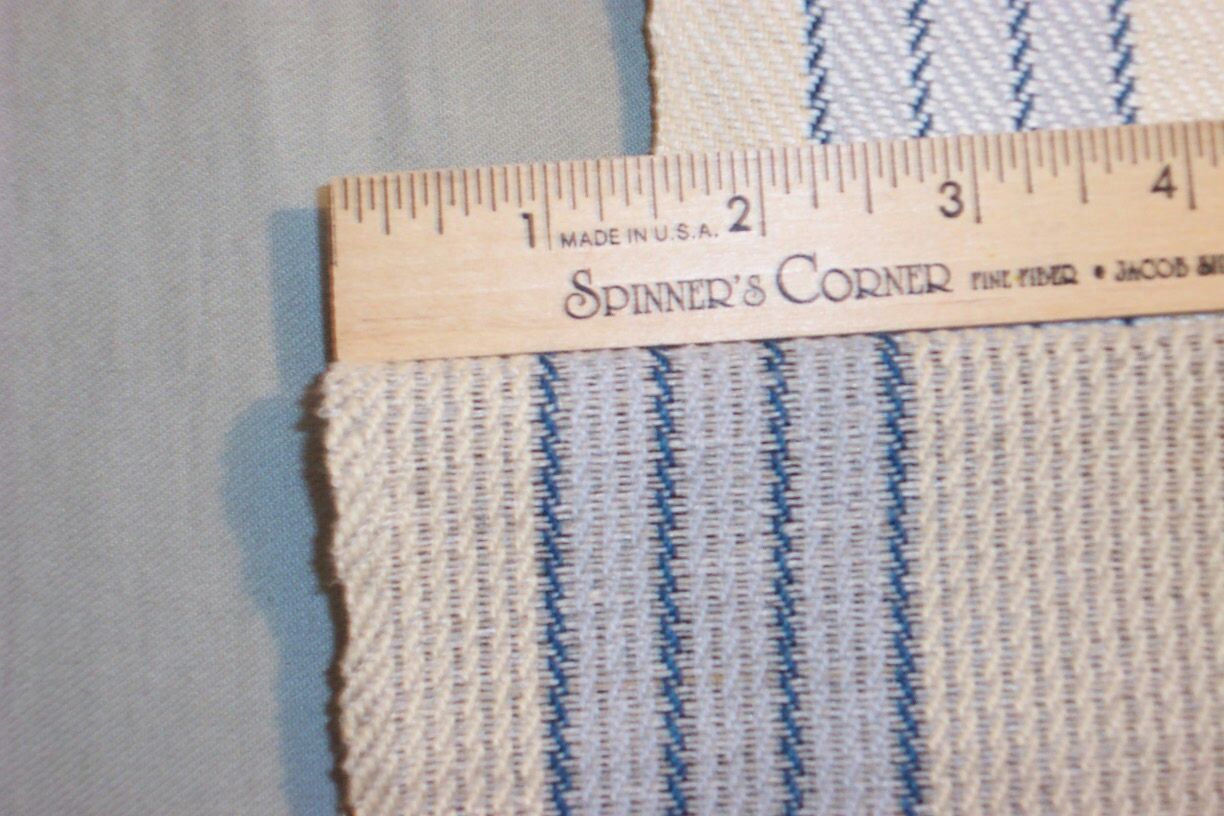
Two towels woven on the same warp, one in linen (foreground), one in cotton (background) will show significant differences in the amount of draw in that results.
On this warp, 23 inches wide in the reed (nearly), the difference in width between the linen and cotton weft is 1.5 inches.
Even in the wet finishing, dimensional loss is much less than cotton would yield.
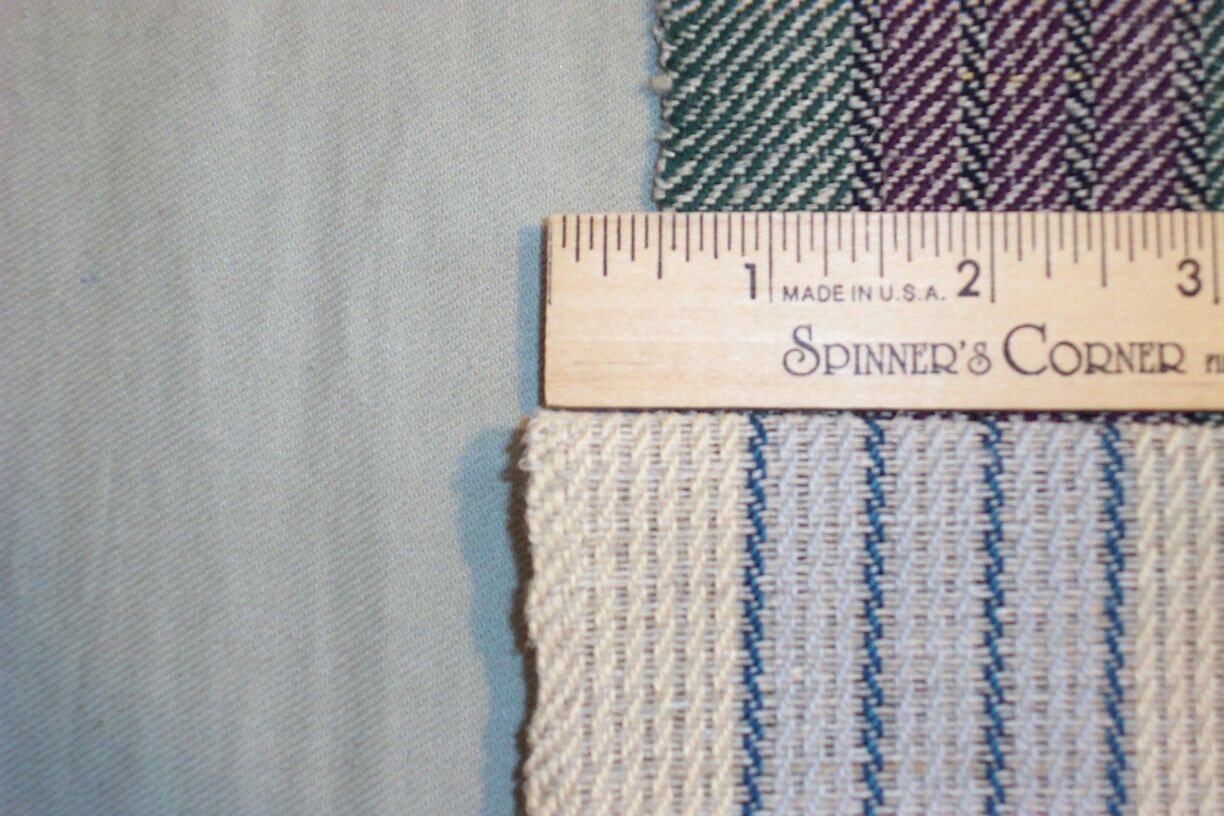
Finished towel in the background, loom state (unfinished) towel in the foreground.
In this case, the difference between unfinished and finished width measurements amount to just .5 inch.
Linen is a ‘special needs’ yarn. It needs special handling.
Some would call it a ‘bad’ yarn, but unless the yarn is tender from over dyeing or too long in the sun, there really is no such thing as a ‘bad’ yarn. There is only yarn and its intended use. It’s when we try to use a yarn for something that it was never intended to be used for that we run afoul of the yarn’s nature.
Or perhaps we don’t realize that the inherent character of the yarn requires special handling, or what those special techniques might be.
And so I call this extremely fine, extremely wire-y yarn pesky because it does require special handling. Handling that slows me down and makes the process of weaving with it less of a joy. 🙂 For me.
But then, knowing what a wonderful fabric will result from dancing with a partner that has a mind of its own, I dance the dance and let it lead me where it will. And the finished towels feel wonderful. Truly.