At the seminar on Sunday, I discussed some books that people might find helpful.
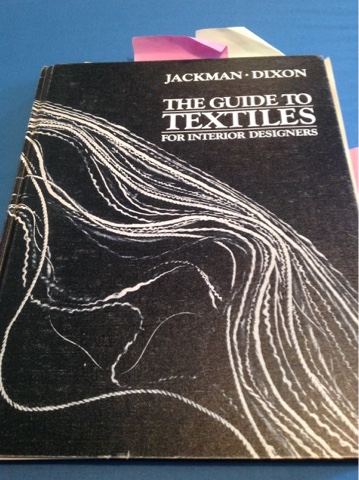
Since the topic was A Good Yarn, I referenced A Guide To Textiles For Interior Designers by Jackman and Dixon.
There are lots of textile science books around, I have almost a dozen, but this is the one that I turn to first. It was written for the textile students at the University of Manitoba, has been updated many times since, but for handweavers, the core information on ‘natural’ fibres hasn’t changed so if you can find an early edition second hand, do get one of those.
I find the information to be well organized, the text concise, charts are clear showing comparisons or characteristics, and nice line drawings. It has pretty much everything a textile artist needs to know in one handy reference.
Other books I mentioned (or forgot in the moment):
Michelle Boyd has two books – Twist published by Ply, which takes a deep dive into the dynamic of twist in the yarns. It was written for spinners, but weavers should have an understanding of how twist in thread affects its behaviour and characteristics.
Her latest book is A User’s Guide to Yarn and the sub-title explains it is for weavers, knitters and crocheters. Published by NineTen Publications. In it she discusses how yarns differ and the requirements for those crafts also differ. So if you do more than one textile craft, you can find out more about why results differ when you use the same yarn and change crafts. There is essential information that explain a lot about why working with yarn can get complicated.
No matter how ‘complete’ a book may be, it may not contain *everything* that a textile artist may like to know. So I have other books I refer to as well. Plus sometimes experts have different information, or interpret it in a different way. So if I’m wanting to understand something, I have several books I can consult and get a consensus. And then contrast that information with my own experience.
I’m not going to list every textile book I own (even after giving some away) but I urge new weavers to NOT rely on the internet to give them good information.
Case in point, I have seen photos of fibres labelled incorrectly. When doing a recent search online I came across photos of cotton fibres incorrectly labelled linen – and vice versa. So don’t assume online is accurate in every case. And do not rely on AI. AI doesn’t know how to weave, so it just makes up an answer that it considers to be what you want to know. I have friends who have had their books scraped by AI, then been misquoted, including fake citations.
AI is not a weaver, knitter, or any other kind of textile artist with actual knowledge of the craft. Lately I’ve been seeing ‘illustrations’ of what AI thinks are looms and…good luck weaving on those. I know it is hard to escape the insidious affect of AI online, so I ask you to get books and refer to them. Second hand is cheaper than new and many weaving books can be found on second hand book sites or at estate sales. Build a library of trusted information. Consult that.
Leave a Reply